
Let's start with the biology part
Your 20s are supposed to be carefree. And then you get the job offer, the student loans, the relationship uncertainty, and the constant low-level sense that you should be doing more. Your body responds to this exactly as it's designed to: it shuts down everything nonessential to survival. Sex becomes nonessential. Desire flatlines. You're not broken. Your nervous system is working perfectly, just not in your favor.
Here's what actually happens physiologically. Chronic stress floods your system with cortisol. Cortisol signals to your body: "We're in survival mode." Your brain downregulates dopamine and norepinephrine, the neurotransmitters that prime arousal. Blood flow redirects away from your genitals toward your muscles and brain. Your body literally deprioritizes pleasure. This is stress physiology 101, and it's the reason so many people in their 20s report desire that's weirdly missing, even in relationships they love.
Why 20s stress hits pleasure differently than other stress
Work stress in your 20s is different. You're establishing yourself. You're proving something. The anxiety is existential, not just situational. This matters because existential stress activates a particular flavor of your nervous system response. You're not just tense. You're in a low-grade state of vigilance.
Add to that the other stuff happening in your 20s: you might be managing new relationship dynamics, renegotiating family boundaries, or just figuring out who you are without the scaffolding of school. That background anxiety literally rewires how your brain processes pleasure signals. Your clitoris sends the same nerve impulses it always has. Your brain just stops receiving them the same way.
The weird part? This doesn't mean your capacity for pleasure is gone. It's dormant. It's being actively suppressed by your nervous system, which is different from broken.
How lemon vibrators rewire your arousal pathway
Here's where air-suction technology actually helps in a way that's not just nice, it's neurologically useful. When you use a clitoral vibrator like the Lem, you're not just stimulating nerves. You're creating a feedback loop that interrupts the stress response.
The suction pattern of an air-pulse vibrator activates your genital sensory cortex in a focused, intense way. This is important because it bypasses the interpretive layer of your brain where stress lives. Your brain doesn't have to generate desire first. The stimulation is strong enough that it pulls your nervous system into a different mode. You feel pleasure happening in real time, and your brain follows.
That's different from trying to relax into arousal when you're stressed. You're not waiting for desire to show up. You're creating a physical sensation so clear and direct that your nervous system has to respond to it. It's like the difference between trying to fall asleep when you're anxious (nearly impossible) and taking a warm bath (often works, because the physical input changes your state).
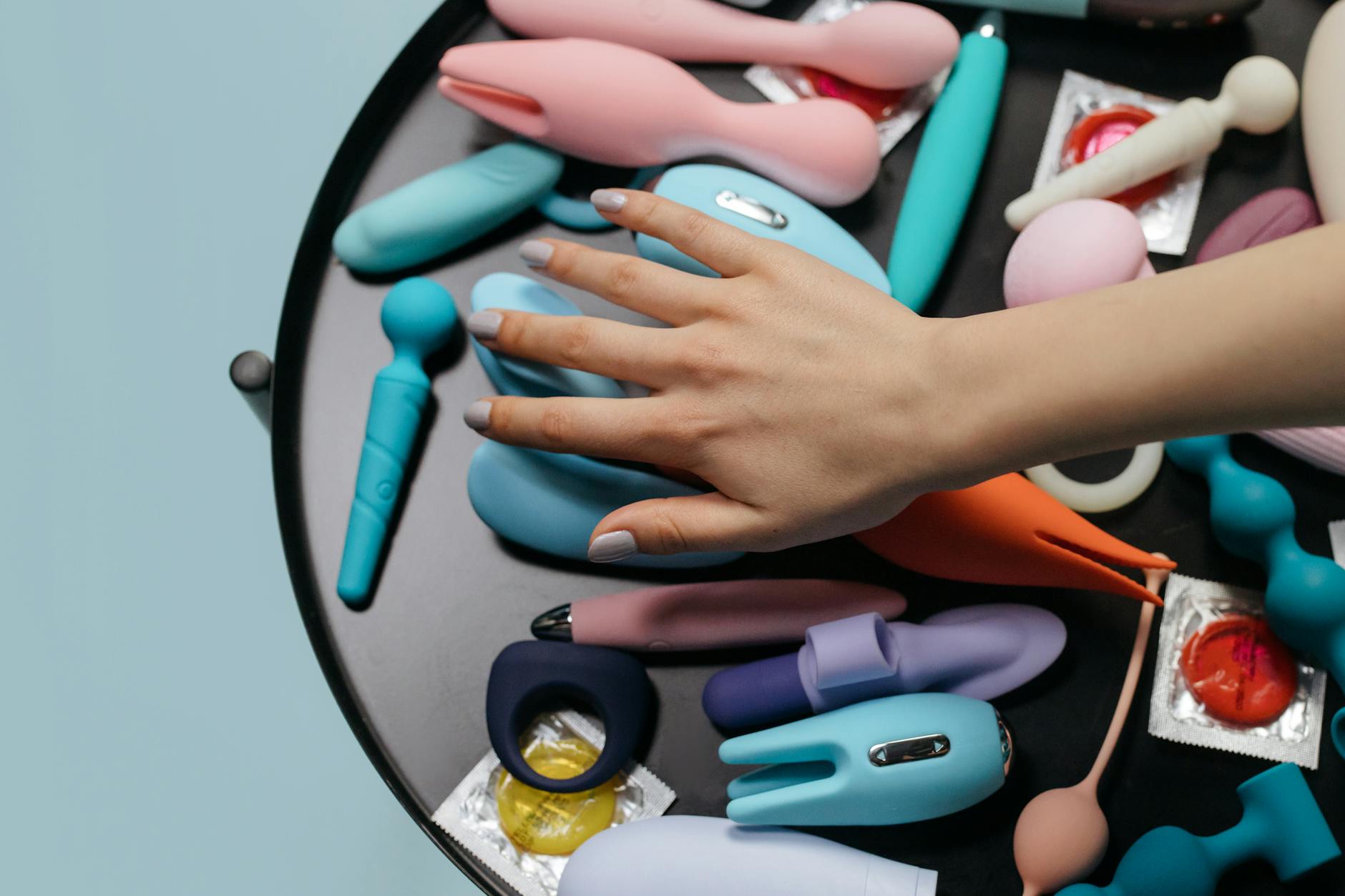
Photo by cottonbro studio on Pexels
The practical steps that actually move the needle
Using a lemon clitoral vibrator when you're stress-depleted isn't just about picking it up and hoping. There's a framework that works.
First, you need time alone. Not because partnered sex doesn't work. It does. But when your nervous system is in stress mode, you need to rebuild your solo arousal pathway first. Solo gives you the freedom to stop whenever and redirect attention without managing someone else's experience. This matters. When you can't feel arousal, the pressure of performing for someone else will kill it faster.
Second, lower the cognitive load. Don't make it a project. Don't tell yourself you "should" have an orgasm. The goal is just to spend 15 minutes with direct clitoral stimulation and notice what your body does. Some days that's an orgasm. Some days it's just the beginning of feeling like your body exists again. Both count.
Third, start low. The Lem and other quality lemon vibrators have multiple intensity settings. When you're stressed and depleted, start at level 1 or 2. Let your nervous system acclimate. You're not trying to force an outcome. You're teaching your body that pleasure is on the menu again.
Fourth, let it be messy. Arousal under stress doesn't look like the textbook version. You might feel it building and then lose it. You might feel more sensation in your body than genital pleasure at first. You might need to use it several times before you feel the real payoff. That's all normal. Your nervous system needs permission to warm back up gradually.
When to bring a partner in
Once you've rebuilt your own arousal pathway solo, partnership becomes easier. But the timing matters. If you bring a partner into this process too early, you'll default to performing rather than feeling. You'll watch yourself for signs of arousal instead of inhabiting it.
When you do involve a partner, the conversation is simple: "My stress is messing with my desire right now, and I need to spend some time rebuilding it alone first. I'm not trying to avoid you. I'm trying to feel something again." That's an actual thing you can say.
If they understand, they'll get it. If they don't, that's a different conversation. But the point is you're not hiding it. You're solving a problem.
The other stuff that actually helps
Lemon vibrators aren't a magic fix for stress. They're a tool that works best when you also address the nervous system side.
Three things that matter as much as the vibrator itself: sleep, movement, and novelty. Sleep because your cortisol regulation depends on it. When you're sleep-deprived, your body stays in sympathetic activation (stress mode) even when the stressor is gone. Movement because exercise actually lowers cortisol and rebuilds your sense of physical agency. And novelty because boredom deepens stress. Do something different. Take a different route home. Try a new café. Your nervous system responds to variation.
If you're in your 20s and stress has truly flattened your desire, a lemon vibrator helps. But it's not separate from the rest of your life. It's a physical reset that works best when paired with actual changes to how you're living.
When to get help beyond the vibrator
If six weeks of solo play with a quality clitoral vibrator doesn't move the needle at all, that's worth talking to someone about. Not because you're broken, but because persistent stress-depleted libido sometimes needs more than a tool. A therapist trained in somatic experiencing can help reset your nervous system. An OB-GYN can rule out hormonal stuff (even in your 20s, birth control can tank desire). These are real options.
The other flag: if you feel desire returning but your partner doesn't respond well to you taking time to rebuild it, that's a relationship dynamic worth examining. Your pleasure matters. If someone is threatened by you reclaiming it, that's information.
Most of the time, though? Stress kills desire in your 20s because your nervous system is doing exactly what evolution programmed it to do. A focused clitoral vibrator, some solo time, and permission to rebuild gradually actually works. Your body remembers how to feel good. It just needs a little interruption of the stress signal to remember.
FAQ: Stress, Desire, and Getting Back on Track
Why does stress specifically kill arousal instead of other physical functions?
Your nervous system runs a hierarchy of needs. When it detects threat, blood flow and neurochemicals redirect toward fight-or-flight systems. Arousal is metabolically expensive and nonessential to immediate survival, so it's the first thing to get cut. Your digestive system follows. Your immune system follows. Reproduction is a luxury your stressed body won't pay for until it feels safe again. This is why you can be incredibly stressed and still hungry (digestion is higher on the priority list than sex) but completely shut down sexually.
Can a lemon vibrator really interrupt the stress response, or does it just distract?
It's both, and both are useful. The distraction is real and valuable. When your attention is on physical sensation, it's not on your to-do list. But there's also a genuine physiological reset happening. The sustained genital stimulation activates parasympathetic activation in your pelvic floor and lower abdomen, which sends a safety signal to your vagus nerve. That signals to your brain: "We're not in danger." It's not permanent rewiring, but it's a real nervous system state change.
Should I use a lemon vibrator every day when I'm stressed, or is that too much?
Three to four times a week is usually the sweet spot when you're rebuilding. Daily can feel like another obligation, which defeats the point. The goal is to remind your nervous system that pleasure is available, not to create a new performance pressure. Some days you'll want more, some days less. Listen to that. If it starts feeling like a chore, you've gone too far.
How long until stress-depleted desire actually comes back?
Most people feel a real shift within three to four weeks of consistent solo play. But that shift often looks like noticing sensation returning, not necessarily like your old baseline desire roaring back. The full recovery depends on whether you're also addressing the underlying stress. If work is still chaotic and you're sleeping four hours a night, a vibrator buys you local pleasure but not systemic recovery.
Is it weird to need a vibrator when you never needed one before?
No. Stress literally changes your nervous system's sensory thresholds. When you're depleted, your body needs more direct input to register pleasure. That's not a new sexual preference emerging. That's stress-induced sensory suppression being temporarily compensated for. As your nervous system regulates, you might find you need less intensity. That's normal too.
Can using a lemon vibrator solo make sex with a partner weird or hard?
Not if you both understand what's happening. The thing people worry about is: "Will they feel like they're not enough?" The answer is usually no, because you're not replacing partnered sex. You're warming up your own arousal system so partnered sex actually feels good. In fact, most partners prefer a partner who's taken the time to rebuild their own desire. It means you're more present and more capable of actual pleasure, not just going through the motions.
Resources and reading
If you want to dig deeper into how stress affects arousal, the work of Stephen Porges on polyvagal theory explains why your nervous system prioritizes survival over pleasure. The clinical literature on cortisol and sexual function is solid and consistent: high sustained cortisol suppresses dopamine and testosterone pathways in ways that directly reduce desire. For the practical side, Emily Nagoski's "Come As You Are" has genuinely useful frameworks for thinking about how stress and arousal interact, especially for people in their 20s navigating new relationships and careers simultaneously. None of this is your fault. Your body is responding rationally to an irrational amount of pressure. A good lemon clitoral vibrator, some solo time, and a nervous system that gradually feels safe again will bring desire back. If you want to talk through what's happening with your specific situation, reach out. That's what we're here for.